yangtheman's
Favorite Foreign Films
moviesforeign

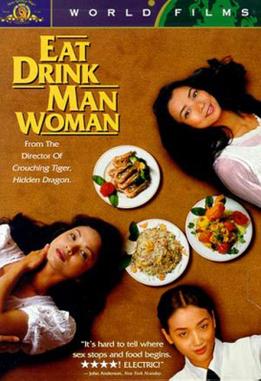
Eat Drink Man Woman

last updated at June 8, 2026 at 4:15 PM PDT(by yangtheman)
0

Eat Drink Man Woman (飲食男女, 1994), Ang Lee — a warm, funny family drama where the meals do as much talking as the people.

Mr. Zhu is a widowed master chef in Taipei, semi-retired and quietly losing his sense of taste. Every Sunday he cooks an elaborate feast for his three grown daughters — and every Sunday the table becomes the stage for whatever none of them can quite say out loud. Eldest Jia-Jen is a guarded Christian schoolteacher still nursing an old heartbreak; middle daughter Jia-Chien is a sharp airline executive who's the most like her father (and secretly the best cook, a path he steered her away from); youngest Jia-Ning works at a Wendy's and stumbles into a love triangle. Over the course of the film each daughter's life cracks open — elopements, pregnancies, new jobs — and the old man springs a surprise of his own that reshuffles the whole family.

What got me is how Lee uses food as the language of a family that doesn't know how to be direct with each other. The opening cooking sequence alone is jaw-dropping — knives, woks, steam, a real master chef's hands — and the recurring banquet becomes this beautiful, slightly sad ritual: they gather, they eat, but they're terrified to actually confide. The throughline of Zhu losing his taste and then getting it back is a lovely quiet metaphor for the whole thing — once everyone stops repressing what they want, life (and flavor) returns.

It's the closing film of Lee's "Father Knows Best" trilogy, and you can feel him working out the tradition-vs-modernity tensions he'd carry into everything later. Charming, generous, gently moving — and do not watch it hungry.

8.5/10. One of the great food movies, and a lovely family one too.

Crouching Tiger, Hidden Dragon

last updated at June 8, 2026 at 4:13 PM PDT(by yangtheman)

0

Crouching Tiger, Hidden Dragon (臥虎藏龍, 2000), Ang Lee — a wuxia epic that's part martial-arts spectacle, part aching romance, and somehow both at full strength.

Set in 18th-century Qing China, it follows two master warriors, Li Mu Bai (Chow Yun-fat) and Yu Shu Lien (Michelle Yeoh), who've loved each other quietly for years but never acted on it out of loyalty to her dead fiancé. When Mu Bai decides to retire and gives up his legendary sword, the Green Destiny, it's stolen by a masked thief — who turns out to be Jen (Zhang Ziyi), a restless young noblewoman secretly trained in martial arts and chafing against an arranged marriage. Her backstory with a desert bandit named Lo, the hunt for the killer Jade Fox, and the collision of these two generations of fighters all build to a tragic, mystical ending on Mount Wudang.

What got me is how Ang Lee fuses the two halves. The fights are gravity-defying and gorgeous — the rooftop chase, and especially that duel swaying through the tops of a bamboo forest — but they're never just spectacle; every clash is an extension of who these people are and what they can't say out loud. Underneath the flying swordplay it's really about restraint and longing: Mu Bai and Shu Lien's decades of unspoken love against Jen's reckless refusal to be caged. Zhang Ziyi is a revelation, and the Tan Dun score with Yo-Yo Ma's cello is haunting.

It swept the 2001 Oscars (4 wins including Best Foreign Language Film, 10 nominations) and became the first non-English film to crack $100M in the US — the movie that kicked the door open for wuxia in the West.

Beautiful, melancholy, thrilling. 9/10.

The Girl with the Dragon Tattoo

last updated at June 8, 2026 at 4:03 PM PDT(by yangtheman)

0

The Girl with the Dragon Tattoo (Män som hatar kvinnor, 2009), Niels Arden Oplev — the original Swedish adaptation of Stieg Larsson's bestseller, and a properly chilly, gripping thriller.

Disgraced journalist Mikael Blomkvist, fresh off losing a libel suit, gets hired by aging industrialist Henrik Vanger to solve a 40-year-old cold case: the disappearance of his niece Harriet from a tiny island where the whole sprawling, Nazi-tainted Vanger clan was gathered. He ends up teaming with Lisbeth Salander — a brilliant, antisocial, heavily tattooed hacker with a brutal past — and together they pull a thread leading into decades of buried family rot: antisemitic serial murder and systematic violence against women. (The Swedish title literally means "Men Who Hate Women," which is the book's real subject.)

What got me is Noomi Rapace as Lisbeth. The mystery is solid pulpy fun — island whodunit, biblical-cipher clues, hidden horrors — but she's the reason it lands. Fierce, damaged, methodical, both victim and the most dangerous person in any room. Her own subplot, including a vicious assault by her court-appointed guardian and her cold, exacting revenge, is rougher than the central case and sticks longer. Rapace basically became a star off this and deservedly so.

Fair warning: it's long and the sexual violence is graphic and hard to sit through.

A great crime thriller anchored by an all-timer performance. 8/10. Fincher's 2011 version is slicker and gorgeous to look at, but Rapace is Lisbeth — if you only watch one, I'd lean this.

Let the Right One In

last updated at June 8, 2026 at 3:59 PM PDT(by yangtheman)

0

Let the Right One In (Låt den rätte komma in, 2008), Tomas Alfredson — a Swedish vampire film that's really a tender, eerie story about two lonely kids.

Oskar is a bullied, withdrawn 12-year-old in a snowy Stockholm suburb in the early '80s, fantasizing about revenge. He befriends Eli, the strange new kid next door who only comes out at night, moves in with an older man who kills people to harvest blood for her, and eventually admits she's a vampire — and "not a girl." As Oskar's bond with Eli deepens, she nudges him to stand up to his tormentors, and the two outsiders fall into something like first love, even as the bodies pile up around them.

What got me is how restrained and quietly beautiful it is — all muted blues, snow, and silence, the horror kept understated until it suddenly isn't (that pool sequence at the end is jaw-dropping). It takes the vampire myth completely seriously instead of for camp, and the central relationship is genuinely moving and a little unsettling — there's an ambiguity about whether Eli is grooming Oskar to become her next caretaker, the way the dying man before him once was. That undertow gives the sweetness a chill.

Gorgeous, sad, and one of the best vampire films ever made. 9/10. (Skip the American remake, Let Me In — it's fine, but this is the real thing.)

Amores Perros

last updated at June 8, 2026 at 3:39 PM PDT(by yangtheman)
0

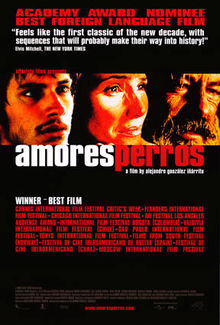
Amores perros (2000) is Alejandro González Iñárritu's blistering debut — three Mexico City stories slammed together by a single car crash.

The structure is a triptych. First is Octavio, a working-class teenager in love with his abusive brother's wife, who gets pulled into the brutal underground dogfighting world to make enough money to run away with her — his rottweiler Cofi becomes a winning machine until it all goes violently wrong. Second is Valeria, a Spanish supermodel who's just moved in with her married lover, whose leg is shattered in the crash; trapped in the apartment with her career evaporating and her little dog literally lost under the floorboards, the relationship rots. Third is El Chivo, a homeless-looking hitman who's actually a former guerrilla and teacher, living with a pack of strays, trying to reconnect with the grown daughter who thinks he's dead. The crash is the hinge all three swing on, and dogs run through every story as the connective thread and the central metaphor.

What got me is the raw kinetic energy — the handheld camera, the grit, the sense of a whole city's class divisions crashing into each other in one intersection. It came out the same era as City of God and Y tu mamá también and it's of a piece with that wave of Latin American cinema that felt genuinely new. Gael García Bernal is electric in his breakout, and El Chivo's arc is quietly the most moving — a violent man trying to find his way back to something human.

One heads-up: the dogfighting scenes are rough to watch (no animals were actually harmed — muzzles were lined with fishing line, "dead" dogs were sedated under SPCA supervision — but it's still intense), and there's domestic violence throughout. It earns its brutality, though; it never feels like shock for its own sake.

Sprawling, savage, alive. 9/10. A hell of a first film.

City of God

last updated at June 8, 2026 at 3:38 PM PDT(by yangtheman)

0

City of God (Cidade de Deus, 2002) is a Brazilian crime epic that hits like a freight train.

It tracks the rise of organized crime in the City of God favela in Rio across roughly twenty years, from the late '60s into the early '80s, narrated by Rocket — a poor kid who dreams of becoming a photographer and mostly just wants to survive long enough to do it. Around him the slum spirals from small-time stickups into full-blown drug-war hell. The engine of that descent is Li'l Zé, who goes from a murderous little kid into a sociopathic kingpin who kills for pleasure. His one humanizing counterweight is his friend Benny, the closest thing the film has to a sweet soul, and when Benny's gone the whole place tips into all-out war between Zé and Knockout Ned, a decent guy pulled into vengeance after Zé destroys his family. Rocket drifts through all of it with his camera, and in the end his photos — of a dead gangster, of police corruption — become his ticket out.

What got me is the sheer kinetic energy. The editing, the split-second flashbacks, the way it loops back to that opening chicken chase — it's been compared to Goodfellas and that's fair, but it's grittier and sadder. Almost the entire cast were real favela kids and non-actors, which gives it a documentary authenticity you can't fake. The "story of the apartment" sequence, showing one flat cycle through tenants as the years pass, is a stone-cold great piece of filmmaking.

Worth noting it drew some real criticism back home — that it aestheticizes favela poverty into something exportable and "cool." Fair point, and you do feel the tension between how stylish it is and how grim the reality was. But it never glamorizes Zé himself; the violence is mostly horrifying, not fun.

Brutal, energetic, unforgettable. 9.5/10. One of the best of its decade.

With a Friend Like Harry...

last updated at June 8, 2026 at 3:36 PM PDT(by yangtheman)
0

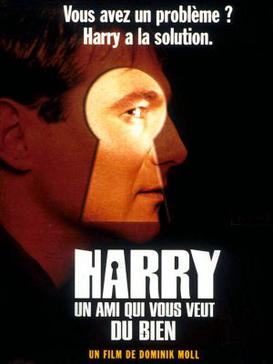
Harry, He's Here to Help (Harry, un ami qui vous veut du bien, 2000) is a French slow-burn thriller that gets under your skin in the best Hitchcockian way.

Michel is a stressed-out dad hauling his wife and three young kids to a run-down summer house, the whole family frayed and cranky in a car with no AC. At a highway rest stop he bumps into Harry, a guy he barely remembers from high school, who's now wealthy, charming, and weirdly intense about their shared past — he can even recite a bad poem Michel published as a teenager. Harry and his girlfriend invite themselves back to the house, and Harry latches onto Michel with this idea that Michel was a brilliant young writer who let his "potential" get smothered by family life. And then Harry starts... helping. Buying them a new car. Removing obstacles. Removing people.

What got me is how quietly menacing it is. There's barely any gore; the horror is all in Harry's smiling, reasonable, utterly unhinged logic — he murders Michel's parents and brother as casual favors, fully convinced he's freeing his friend to be the artist he was meant to be. Sergi López is fantastic, all warmth on the surface with something dead underneath (he won a César for it). It's really a film about the toxic seduction of someone telling you your family is the only thing standing between you and greatness.

The ending is darkly perfect: Michel kills Harry, drops him down the well, and quietly goes back to his ordinary life — but he does finish the story Harry pushed him toward, so the film leaves you wondering how much of Harry got into him.

Tense, funny, deeply creepy. 8/10. A great underseen one.

Run Lola Run

last updated at June 8, 2026 at 3:35 PM PDT(by yangtheman)

0

Run Lola Run (Lola rennt, 1998) is an 80-minute jolt of pure adrenaline.

The setup is dead simple: Lola gets a panicked phone call from her boyfriend Manni, who's lost 100,000 marks belonging to a very dangerous crime boss. He's got 20 minutes to come up with the cash or he's dead, and he's about to rob a supermarket to do it. Lola tells him to wait — she'll figure something out — and then she runs. That's basically the movie: Lola sprinting across Berlin to save him, set to a relentless techno score.

The clever bit is that it plays out three times. Each run starts the exact same way — flame-red hair, same staircase, same guy with the dog — but a tiny variation early on (whether she gets tripped, a few seconds' difference) cascades into a totally different outcome each time. One ends with her dead, one with him dead, and the third one works out. Along the way it throws in these rapid-fire photo montages showing how her split-second brushes with random strangers completely reshape their lives. It's basically the butterfly effect / Sliding Doors idea, but caffeinated.

What got me is how much fun it is while still poking at real free-will-vs-fate questions. Franka Potente is magnetic, the editing is frantic in the best way, and it never overstays its welcome. (Apparently it influenced Majora's Mask, which tracks.)

Style over depth, sure — but what style. 8.5/10.

Downfall

last updated at June 8, 2026 at 3:26 PM PDT(by yangtheman)
0

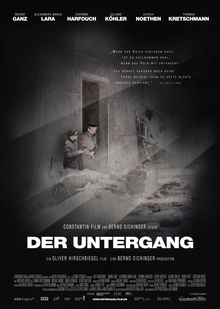
Finally watched Downfall (Der Untergang, 2004) — the German film about Hitler's last days in the bunker, and it's heavy, gripping stuff.

It covers the final ten days or so of the Third Reich, mostly trapped inside the Führerbunker as the Red Army closes in on Berlin in April 1945. We see it largely through the eyes of Traudl Junge, Hitler's young secretary, who's based on the real woman (the film bookends itself with documentary footage of the actual Junge late in life, admitting her youthful ignorance was no excuse). Inside, it's all collapse: Hitler raging at generals over armies that no longer exist, ordering counterattacks that can't happen, alternately gentle to his staff and coldly declaring the German people deserve to be wiped out for losing. Around him, everyone's choosing between suicide and escape — Goebbels and his wife being the most horrifying, with Magda calmly poisoning her own six children rather than let them grow up in a world without Nazism.

What got me is Bruno Ganz. He apparently studied a rare recording of Hitler's actual speaking voice for months, and the performance is uncanny — shaky-handed, charming one second, monstrous the next. That's also what made the film controversial: showing Hitler as a human being rather than a cartoon devil. The director's line stuck with me — that bad people don't walk around with claws, and pretending they do is just a comforting lie. (Fun aside: this is the source of the endless "Hitler reacts to..." subtitle-parody memes — that's the Steiner rant scene.)

It deliberately leaves out the Holocaust, which is a fair criticism — you could watch this and forget what the regime actually did. But as a claustrophobic portrait of a world ending, it's riveting.

8.5/10. Ganz alone makes it essential.

Oldboy

last updated at June 8, 2026 at 3:24 PM PDT(by yangtheman)
0

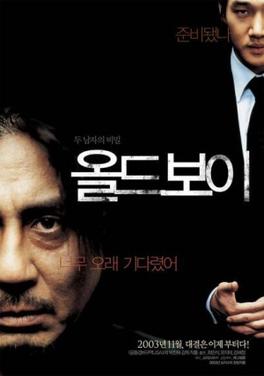
Closed out the run with Oldboy (2003), Park Chan-wook's revenge nightmare — and it left me a little stunned. Fitting that Choi Min-sik shows up here too after New World; this is the one that made him a legend.

Oh Dae-su, a regular drunk businessman, gets abducted and locked in a single room for 15 years with no idea who did it or why. One day he's just... let out. The whole film is him hunting down his captor, falling for a young sushi chef named Mi-do along the way, while the captor — a rich, smug guy named Woo-jin — turns the search into a five-day game. The twist is genuinely one of the most brutal in cinema, and I won't fully spoil it, but it ties back to a rumor Dae-su carelessly spread in high school, and it recontextualizes his entire relationship with Mi-do in the worst way imaginable. Dae-su cutting out his own tongue, the ambiguous snowy ending — it's bleak in a way that sits with you for days.

What got me is that it's not just shock for shock's sake. It's basically a Greek tragedy — Park named the lead to echo Oedipus on purpose. And the famous single-take hallway fight, Dae-su with a hammer against a corridor of guys, shot in one continuous side-scrolling take, is still one of the best action scenes ever filmed. (Fair warning: the live octopus thing is real, and there's a lot here that's hard to watch.)

Not for everyone, and definitely not a comfort watch — but as a piece of filmmaking it's astonishing.

9/10. Tarantino's jury gave it the Cannes Grand Prix, and I get why.

Amélie

last updated at June 8, 2026 at 3:22 PM PDT(by yangtheman)

0

Amélie's a shy waitress in Montmartre with a big imagination and a lonely life. She stumbles on a box of childhood treasures hidden in her apartment wall, tracks down the now-grown owner, and secretly returns it — watching him tear up over it. That's her lightbulb moment: she decides to quietly fix the lives of everyone around her. Matchmaking lonely coworkers, avenging a bullied grocery clerk, mailing her dad's garden gnome around the world to nudge him out of his shell. Meanwhile she's falling for Nino, a guy who collects discarded passport-booth photos, and the whole back half is her too scared to actually go talk to the person she likes — until a neighbor finally pushes her to stop fixing everyone else and grab her own happiness.

What got me is how it looks and feels. Saturated greens and reds, Paris as a storybook, Yann Tiersen's accordion score that's basically inseparable from the movie now. Tautou is impossibly likeable. It's whimsical to the point that I get why some people find it twee, but it won me over completely.

Easy comfort-watch. 8.5/10.

Ran

last updated at June 8, 2026 at 3:22 PM PDT(by yangtheman)
0

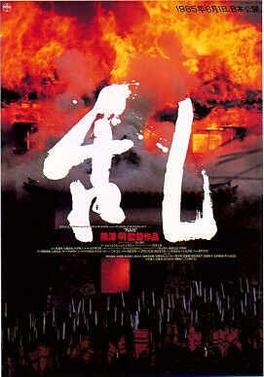
Aging warlord Hidetora decides to split his kingdom among his three sons and step back. The youngest, Saburo, tells him it's a stupid idea and gets exiled for his honesty — which of course makes him the only loyal one. The two older sons immediately turn on the old man, and the whole clan collapses into war. The twist Kurosawa adds to Lear is that Hidetora isn't an innocent fool who deserves pity — he was a brutal conqueror who slaughtered families to build his empire, so a lot of what comes for him is karmic. The standout character is Lady Kaede, who's secretly engineering the family's destruction as revenge for her own murdered family. Cold, terrifying, unforgettable.

It ends the only way it can: everyone dead, the castle in ruins, and a blind man stumbling alone at the edge of a cliff. Bleak as it gets.

What got me is how it looks — color-coded armies, real castles, that one massive burning-castle battle scene played with no dialogue, just Takemitsu's mournful score. Kurosawa said "Hidetora is me," and it lands as this whole meditation on a life of violence catching up with you.

Slower and colder than Seven Samurai, more painting than action movie. But the images stick.

9/10. The battle sequence alone is worth it.

Seven Samurai

last updated at June 8, 2026 at 3:22 PM PDT(by yangtheman)

0

A poor farming village learns bandits will come back after harvest to rob them, so they hire seven masterless samurai willing to fight for nothing but food. Led by the calm, aging Kambei (Takashi Shimura), the group comes together one by one — the standout being Mifune's Kikuchiyo, a loud, unhinged wannabe-samurai who turns out to be a farmer's son himself. They train the terrified villagers, fortify the place, and the back half is one long, muddy, rain-soaked battle. Four of the seven die. The famous closing line — that it's the farmers who really won, not the samurai — lands hard.

What got me is how modern it feels for something from 1954. The "assemble the team" structure that every heist and action movie copies? Basically started here. And it's not simple hero worship — the villagers had been killing wounded samurai for their gear, so nobody's clean, and that moral murkiness is the point.

Long, but it earns every minute.

9/10. Glad I finally watched it.

Y tu mamá también

last updated at June 8, 2026 at 3:41 PM PDT(by yangtheman)

0

Y tu mamá también (2001), Alfonso Cuarón — starts as a horny teen road-trip comedy and quietly turns into something much sadder.

Two Mexico City teens, Tenoch and Julio, talk an older Spanish woman, Luisa, into a road trip to a made-up beach while their girlfriends are in Europe. On the way she sleeps with both, exposes that they've each betrayed the other, and their macho best-friendship unravels — ending in a drunken night that breaks them for good. A calm narrator keeps cutting in with the poverty and politics rolling past the car windows, turning a coming-of-age story into a portrait of Mexico. The gut-punch ending: a year later they learn Luisa was dying the whole time.

Smarter and sadder than its "sexy Mexican movie" rep. 9/10.

Parasite

last updated at June 8, 2026 at 3:49 PM PDT(by yangtheman)
0

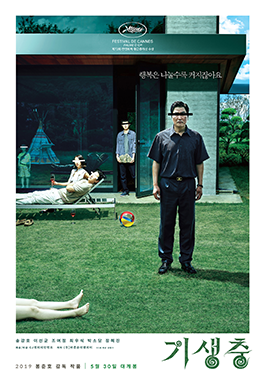
Parasite (기생충, 2019), Bong Joon-ho — the one that swept the Oscars, first non-English film to win Best Picture.

A poor family cons their way into working for a rich one, posing as unrelated hired help until a secret in the house drops the floor out and it turns dark and violent. What got me was how much the movie lives in its vertical symbolism: the Kims are stuck down in a semi-basement, looking up at the world, taking in all the street filth and the flood water that literally flows down into them, while the Parks sit up a long hill in a house full of glass and light. Bong shoots every trip between the two worlds as a descent — that flood-night sequence is one long plunge down stairs and hills from the top of society to the bottom. And then there's a hidden bunker below the basement, a third tier nobody up top even knows exists. The "smell" thing seals it — the poverty clings to them no matter how good the con is, and it's what finally snaps Ki-taek. The ending lands you right back in that basement to make clear no one's climbing the hill.

Brutal class commentary, perfectly built, gutting finish. 9.5/10. Probably the best film of its decade.

New World

last updated at June 8, 2026 at 7:18 PM PDT(by yangtheman)
0

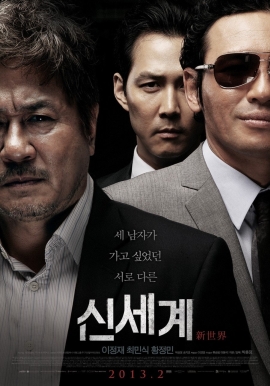
This is a Korean crime flick about Lee Ja-sung, an undercover cop who's been buried inside Goldmoon, the country's biggest crime syndicate, for eight years. The whole time his handler (Chief Kang, played by Choi Min-sik — yeah, the Oldboy guy) keeps dangling a way out and never delivers, just keeps squeezing him for more. When the syndicate's chairman dies, two guys go to war over the throne, and Kang basically plays puppet master trying to set them against each other so a weak guy ends up in charge and the cops can crush the whole thing.

What got me is it's way less about shootouts and more about Ja-sung slowly getting crushed between two worlds. His wife gets attacked and miscarries. His only real friend in the gang, Jung Chung (Hwang Jung-min, who's incredible — flamboyant, funny, low-key terrifying), figures out he's a cop but stays loyal anyway. By the end Ja-sung stops being a pawn and just... takes everything. Has everyone who used him killed and walks into the chairman's seat clean. The final flashback to him and Jung as young thugs, him smiling for the first time, is what made the whole thing land.

It draws heavily on Infernal Affairs / The Departed territory, but the slow-burn loyalty-and-betrayal stuff is the real draw, not the violence. Hwang Jung-min straight up steals it.

Solid 8.5/10 for me. Watch it for the three lead performances alone.